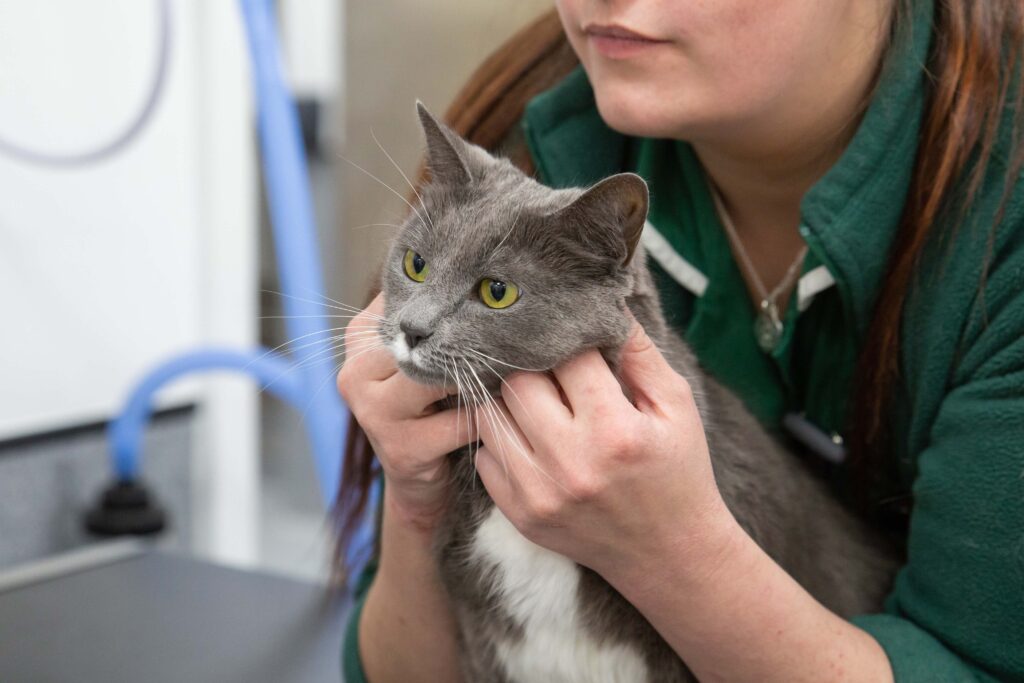
There are lots of reasons why your cat might be sneezing. Some cat sneezing gets better on its own, but your practice team can help you work out the cause of persistent sneezing and start the right treatment. You can also explore our cat advice section for more guidance on common cat health concerns
As with humans, the occasional bout of cat sneezing can be common and is often not a cause for concern.
If you’re unsure why your cat is sneezing, your local VetPartners practice is here to help you identify and treat any underlying causes.
Why is my cat sneezing?
Sneezing in cats can have various causes, which can range from minor environmental factors to underlying health conditions.
Environmental irritants
Your cat might be sneezing because something in their environment, such as dust, smoke, fumes from cleaning products or perfumes, is irritating their nasal passages.
Foreign bodies
Foreign bodies in the nasal passages, such as grass that has become stuck to the back of their nose or throat, can cause bouts of sneezing.
Cat upper respiratory infection
Sneezing can be a symptom of viral, bacterial or fungal cat upper respiratory infections.
Feline herpesvirus and feline calicivirus are some of the most common viral causes, which is why regular vaccinations are essential to maintain protection.
Dental disease
Dental disease in cats affects their teeth and gums, which can affect the inside of a cat’s nose and lead to sneezing.
Nose growths
In rare cases, growths inside the nose (such as polyps or tumours) may be a cause, so it’s best to have your vet check to be on the safe side.
If your cat keeps sneezing or you are concerned about them, your local VetPartners practice will be happy to help.
When should I be concerned about a sneezing cat?
Some sneezing in cats can be normal and is nothing to worry about, but it’s always a good idea to speak to your vet if you are worried or notice any of the following signs:
- Persistent or frequent sneezing.
- Runny nose and nasal discharge (especially yellow, green or bloody).
- Eye discharge or red eyes.
- Reduced appetite and/or water intake.
- Lethargy.
- Coughing.
- Laboured breathing.
Cats who have stopped eating should see a vet as soon as possible to prevent them from getting ill, as they may be at greater risk of becoming dehydrated and developing secondary conditions such as hepatic lipidosis.
If you have any questions about your cat’s health, reach out to your veterinary practice for guidance.
How can my vet help my cat’s sneezing?
At your appointment, your vet will review your cat’s history and perform a full health check.
From there, they might recommend further tests such as blood work, swabs or imaging tests to help them diagnose any underlying health conditions that may be causing sneezing.
Cat sneezing treatment options will vary depending on your cat’s presentation, but can include antibiotics, antiviral treatments, nasal drops, anti-inflammatories or dental treatment.