If you’ve noticed your cat shaking their head or scratching at their ears, speak to your vet about cat ear mites. They can recommend a suitable treatment plan to protect your cat from infection and help prevent further outbreaks. You can also explore our cat advice section for more guidance on common cat health conditions.
Cat ear mites are common and relatively easy to treat with the right care. Your veterinary team can diagnose cat ear mites and prescribe the right treatment, while helping you prevent ear mites in the long term.
Cat ear mites are tiny parasites that our cats can pick up from close contact with another infected animal, or less commonly from their environment, for example, sharing blankets or grooming equipment with an infected pet.
Ear mites in cats are common and cause sore ears, often with thick, dark, crusty discharge. They can be very itchy and painful, and you may notice your cat shaking their head and scratching at their ears with their back feet.
If you’re worried about cat ear mites or unsure of how to treat and prevent them, reach out to your local VetPartners practice for support.
How can my cat catch ear mites?
Cat ear mite causes can vary. Your cat can pick up ear mites from several different places, including close contact with another pet who has ear mites (such as rabbits, cats, or dogs) or their environment (for example, pet bedding at home).
Cats can catch ear mites at any time of year, but don’t worry – your veterinary practice is ready to support you and help you treat cat ear mites safely.
How do I know if my cat has ear mites?
Ear mites in cats are common and can cause various symptoms, including:
- Sore ears often with thick, dark, crusty discharge.
- Pain and itching.
- Head shaking.
- Scratching their ears.
- Feeling off-colour and reluctant to let you touch their head.
- Sores on the face and neck (in severe cases of cat ear mites).
When should I be concerned?
If you think your cat has ear mites or you are unsure of how to help them, call your veterinary practice. Your vet can offer advice and help you start a suitable treatment plan.
If your cat has stopped eating, please contact your practice team for support straight away.
Ear mites are easily spread between cats and other pets, so any other pets at home will also need to be treated to fully resolve the issue.
What can my vet do for ear mites?
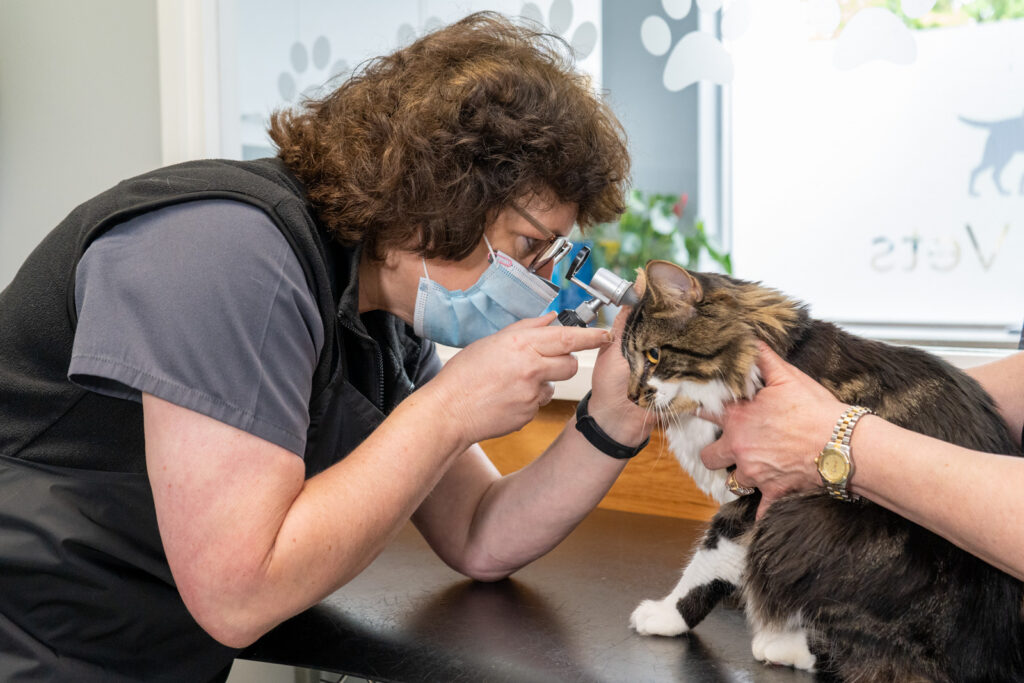
Your vet can check your cat’s ears and overall health and recommend further tests, if needed.
If ear mites are found, your vet can recommend a suitable treatment to treat the problem and help your cat feel comfortable again.