Hyperthyroidism is a common hormonal disorder that affects many older cats. It can be easily managed with the right care, and your vet can help you decide the best treatment for your cat.
As our cats enter their senior years, their needs might change a little. Your practice team can help you keep your feline friend comfortable and healthy throughout their lifetime.
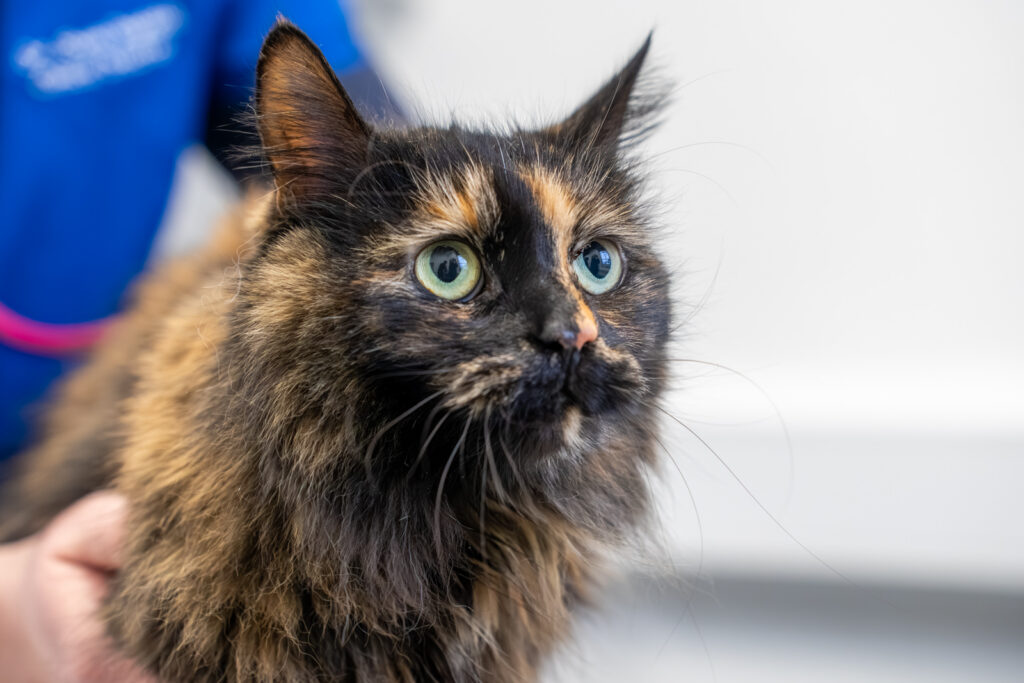
Cat hyperthyroidism is a hormonal disorder where the thyroid gland produces too much thyroid hormone. It’s one of the most common hormonal disorders in cats and is commonly seen in older cats.
Many cats respond well to hyperthyroid cat treatment and monitoring, and your veterinary team can recommend the right treatment for your cat.
For further advice and support, please reach out to your local VetPartners practice.
What are the signs of hyperthyroidism in cats?
When a cat has hyperthyroidism, their metabolism speeds up, which can put stress on various parts of the body.
Symptoms can overlap with other conditions and might not be that noticeable at first, so it’s always a good idea to check in with your vet for advice if you notice any changes.
Cat hyperthyroidism symptoms can be wide-ranging and may include:
- A cat losing weight but eating lots.
- Weeing/pooing and drinking more.
- Vomiting and/or diarrhoea.
- Irritability, aggression, nervousness or hyperactivity.
- Restlessness or vocalising more.
- Fast heartbeat.
- Scruffy/greasy coat or excessive grooming.
- Muscle weakness, in severe cases leading to difficulty holding the head up.
What causes hyperthyroidism in cats?
Hyperthyroidism in cats occurs when tumours in the thyroid gland produce too much of the thyroid hormone.
While the exact cause isn’t always clear, your vet can guide you through the best options for your cat.
Age
Hyperthyroidism in cats is caused by an overactive thyroid in cats producing too much thyroid hormone. Many middle-aged or senior cats with thyroid problems.
Changes in thyroid tissue
Many cat hyperthyroidism cases are linked to a benign change in thyroid tissue, and the exact underlying causes are not always clear.
Environment
It has been suggested that environment and diet might play a part in causing cat hyperthyroidism.
When should I book a vet appointment?
If you think your cat might have cat hyperthyroidism, book an appointment with your practice. Your vet can help you find the best treatment plan to support your cat’s comfort.
You should always call your vet if you notice any of the following warning signs:
- Rapid or significant weight loss.
- Noticeable changes in your cat’s thirst or how often they wee/poo.
- Repeated vomiting or diarrhoea.
- Difficulty breathing.
- Extreme restlessness.
- Weakness or collapse.
- Sudden changes in vision.
How can my vet diagnose and treat hyperthyroidism?
At your cat’s appointment, your vet can check your cat’s history, perform an examination and carry out blood tests to diagnose cat hyperthyroidism.
This is also a great opportunity for your vet to conduct a full health check, including kidney function and blood pressure checks, to help develop the safest hyperthyroid cat treatment plan.
They might also test your cat’s urine or carry out an ECG (echocardiogram), which is a quick and safe ultrasound scan of the heart.
There are a number of treatment options, and your vet can help you decide which is most suitable for your cat.
Hyperthyroid cat treatment options might include thyroid medication for cats to reduce thyroid hormone levels, radioactive iodine treatment, surgery or a prescription diet.
Reach out to your local VetPartners practice, who can test for hyperthyroidism and help to get your cat feeling well again. With the right care, your feline friend can still enjoy playful days and cosy snoozes.
What can I do at home to help?
The best thing you can do for your cat is to book an appointment with your vet, who will be experienced in caring for cats with hyperthyroidism.
At home, there are a few things you can do to monitor and support your cat’s condition.
Safe steps to take
- Book an appointment with your vet as soon as you can.
- Monitor your cat’s weight (ideally weekly).
- Monitor appetite and water intake.
- Monitor behaviour.
- Write down what has changed and when – take this information to your vet appointment.
What to avoid
- Never give your cat any human medication.
- Don’t make major dietary changes without veterinary advice.
- Never give your cat old, leftover medications or medications for other pets.
If you’re worried about your cat, contact your veterinary practice for support.