

Great client experiences are built by great teams.
From the first anxious phone call, to explaining treatment and nursing care, providing updates during a hospital stay and supporting clients through aftercare, RVNs can have a huge influence on how a client experiences their pet’s care.
Here, our Learning and Development Manager Jo Oakden explores why client experience is much more than what happens in the consult room.
THERE is a lot of discussion around the client experience within our profession and our practices right now.
We have it in CPD, articles and internal training – and often this focuses on the vet-client relationship in the consult room and the reception teams’ interactions with the client.
Both are hugely important. But they are only part of the story.
Because if we take a step back and map out the entire client journey through a practice, something interesting becomes clear. The vet may be the person the client spends the most time talking to about their pet’s diagnosis or treatment, but that interaction represents only a small part of the overall experience.
Let’s think about a situation, such as an anxious phone call because an older dog has suddenly gone off its back legs, or the cat that has stopped eating.
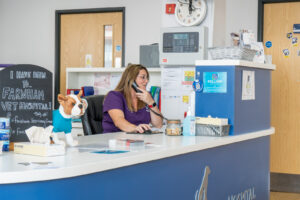 The first voice their hear is the reception or client care team.
This moment is crucial as the support offered here can set the emotional tone for everything that follows. It’s our responsibility to get that right, before we get close to consultation.
Then, when the patient has seen the vet, it is often the RVN who supports that client through the treatment plan, the options, the nursing care. It can be the RVN who explains what the care involves and what that will look like.
These moments are often where the emotional experience of veterinary care is created – and many of them sit with our RVNs and wider nursing, patient care and client care teams.
I certainly remember showing anxious clients the hospital so they can see where their beloved pet will be staying and who will be looking after them. This is often really worrying for the client, as they never see what is going on or who is looking after their pet.
Here we have an opportunity to not only demonstrate the skill, compassion and care that an RVN gives but also relieving some of the anxiety and building trust between the client and the practice.
There is evidence behind this. If we consider euthanasia, there are lots of studies and research around the emotional impact and the trust gained or lost during this time.
Research by Fernandez-Mehler et al. explored client satisfaction and the reasons some clients chose to change veterinary practices following the euthanasia of a pet. Interestingly, the decision wasn’t driven by perceptions of clinical skill. Instead, clients placed greater importance on the compassion and care they received, and the clarity of communication throughout the experience. And that experience wasn’t created by one individual – it was shaped by the whole team.
 A client’s overall impression is built across their whole journey, from that first phone call, the waiting room, clinical pathways, payment and aftercare. Veterinary nurses are well placed to notice this. As RVNs, we often have more opportunity to observe and understand how the client and the pet experience the practice, and to be the ones who innovate to improve.
Let’s look at an emergency care case example.
The first call. Clients arriving in crisis are dealing with heightened emotions, an unexpected medical situation and financial uncertainty, often all at once. Effective communication here is as much about building trust and managing expectations as it is about transferring information.
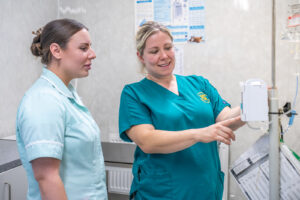 That is a nursing and client care skill as much as it is a clinical one, and it deserves the same recognition and investment. Compassionate communication, emotional support and guiding clients through difficult moments are skills that can be developed, practised and strengthened – and we should be giving them the training time they deserve.
Money conversations are a well-known trust flashpoint, and they’re routinely handed to the nursing and reception teams to deliver. Treated as an admin task, they erode trust. Treated as a genuine communication skill with understanding and contextualised care, they build trust.
A short, proactive update call during a hospital stay does more for loyalty than almost anything said in a consult. It tells a client their pet is being cared for, by a team who care.
So, what can we make sure we are doing? Consider not just the client led interactions, but also how we can be proactive. Are we giving regular updates for in patients, whether that be the day patients or longer term? How can we improve this and ensure that this is personalised and shows the compassion and care we provide?
 Aftercare is an important aspect. Once that patient has left our care physically, how can we ensure that a connection is maintained whilst that patient is still in recovery or undergoing treatment? This should be a collaborative approach by the nursing team and the reception team.
Client experience doesn’t come down to one single action, owned by one role. It is a team-based approach. From the first interaction at reception through to the clinical journey and ongoing care, multiple members of the team shape how a client feels about their experience.
There is a real opportunity to recognise the importance of these skills and invest in developing them within our teams, giving colleagues the training, support and confidence they need to deliver an exceptional client experience at every touchpoint.
Trust isn’t won in a single moment. It is earned through every touchpoint along the way. We need to recognise, value and empower the teams who are building that trust every day.
- At VetPartners, we support our RVNs through clinical CPD, career development and training with RVN Evolve, as well as supporting teams to attend events such as BVNA Congress – giving colleagues opportunities to learn, develop and bring new ideas back into practice.
 About the author
Jo Oakden FdSc RVN graduated from the RVC in 2005 and has worked across small animal and mixed practice, holding roles including RVN, Head RVN, Clinical Coach and Practice Manager. A former BVNA President (2021) and BVNA Advisory Chair (2022–2026), Jo is also a BVNA Honorary Member and has been a Vetlife Trustee since 2022.
Jo joined VetPartners in 2021 as a Business Support Manager before moving into Learning & Development in 2025, where she focuses on the evolution of Career Pathways. Passionate about developing people and the profession, Jo’s focus is on empowering colleagues to be the best they can be in their roles.