
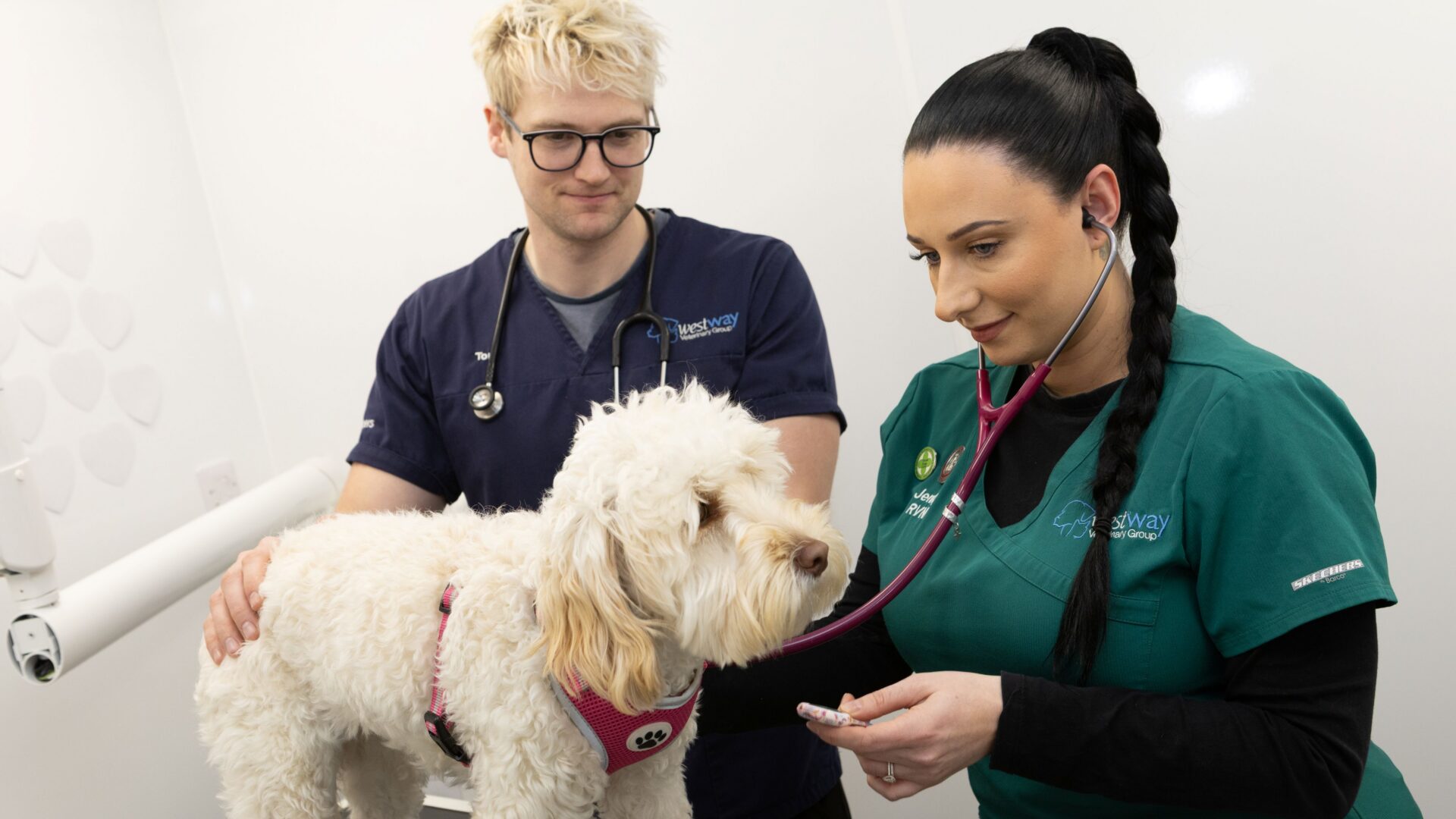
A quick Google search can provide a wealth of information about a pet’s symptoms, but it cannot replicate the knowledge, experience and professional judgement of a veterinary team. Nor can it offer the reassurance of someone who knows your pet, understands your concerns and has the expertise to guide you through the next steps.
Here, VetPartners Veterinary Nurse of the Year Jenny Johnson explores why veterinary teams have so much more to offer than answers from a search engine – and why their skills, experience and relationships with clients remain more valuable than ever.
 IT is commonplace now for clients to arrive in practice having Googled their pet’s symptoms, often with an idea of what they think is wrong. With information so readily available online, this is becoming increasingly common.
Whilst the information available online can be helpful, it cannot replace advice from a veterinary team and, in some cases, can be incorrect or even detrimental to our patients. We see this, for example, when members of the public give medical advice on social media groups.
What clients don’t have access to online is the experience of their veterinary team.
Veterinary practices are equipped with teams of experts in their fields, with many years of experience in not only medical care and advice, but also emotional support – something that cannot be replicated by the internet. We develop special relationships and bonds with our clients and patients over time and build trust, providing owners with confidence in our care and expertise when they find themselves with a poorly pet.
I believe communicating this message to our clients is an area we can improve in the veterinary sector. We need to consider what we are competing with. Information can be easily accessed, and we cannot compete with this. However, we can focus on showing our clients why they can trust us as their source of information by being more transparent and open about what happens within our practices.
There is also a lot of care behind the scenes that our clients never get to see, and I think this is where we can use social media and the internet to not just share information, but also share patient success stories, showcase the skills of our teams and our facilities, and demonstrate our compassion and care for our patients.
This allows clients to see that veterinary medicine is not simply a consultation, a procedure or a bill. It is a journey.
Embedded within every practice is a culture that is unique and created by the team who work there. This is something that cannot be found online but can only be experienced. Clients who visit practices with a positive team culture will feel the benefit of this when they walk through the door.
We’re part of the local community
 Practices can also be an active part of the community. Taking part in local litter picks and providing pet first aid courses at local cafés are just a few of the things we do as a practice to engage with the public.
The internet can provide information about a poorly pet, but it cannot tell an owner what it feels like to leave their pet in a veterinary practice. It cannot show them how we provide patients with reassurance when they are frightened, recognise subtle changes in a recovering patient through years of experience, notice an abnormal ECG trace during anaesthesia, or recognise when a patient requires further pain relief through symptomatic changes and pain scoring systems.
And most importantly, it cannot provide the feeling that someone genuinely cares about their pet.
At the centre of that experience are our Registered Veterinary Nurses (RVNs). As a profession, I feel we still have huge potential to utilise RVNs more effectively. An experienced RVN is not just there to assist the veterinary surgeon. They are clinical experts in their own field and come equipped with knowledge, practical experience, anaesthesia skills, inpatient nursing expertise, client communication skills and a strong understanding of patient behaviour and welfare.
Historically, RVNs have had less clinical responsibility. However, the role of the RVN has developed dramatically over the years, and our RVN teams now provide practices with clinical knowledge and practical experience across areas including anaesthesia, inpatient care and patient monitoring, diagnostic imaging, theatre care, pain management, nutrition, communication and welfare.
RVNs have a wide variety of skills and interests
An RVN’s professional development does not end at qualifying. As time goes on, we have seen an increasing number of additional certificates that RVNs can undertake to progress in their chosen area of interest.
It is common now to find teams with nurses who all possess different skills and interests. One nurse may undertake a certificate in emergency and critical care, another in anaesthesia, another in consulting, while another develops advanced knowledge in nutrition.
Communicating this to our clients is vital in helping them understand the skills within our nursing teams. Instead of simply being told, “A nurse will look after your pet,” we should be advertising their additional skills and achievements. We could instead say:
“Your pet will be cared for by an experienced RVN who holds a certificate in anaesthesia.”
That communicates something very different.
This allows our clients to understand that their pet is not simply being cared for by “the nurse”; they now understand that their pet is being looked after by an extremely knowledgeable and experienced RVN with a particular skill and passion for anaesthesia.
This is particularly important because veterinary nurses may spend a significant amount of time directly caring for patients, yet so much of their skill, expertise and qualifications remain invisible to the client unless we tell them.
With clients increasingly making decisions based on what they see online, communicating the values and standards of our practices, as well as the skills of our teams, through social media and local groups can demonstrate the compassion, care, success stories, teamwork and expertise that go into veterinary care.
Care and compassion cannot be found online
 It can also help owners understand the reality of how a veterinary practice works and what they are paying for when they bring their pet to us.
A client may arrive knowing the symptoms of a particular disease, but they are still looking to us to interpret that information, provide professional judgement, and offer support and a treatment plan.
The future of veterinary practice is not about competing with information. It is about providing our clients with something they cannot find online: an experience of care, compassion, expertise and transparency about the people, skills and equipment behind their pet’s care.
So, how can we make these skills more visible? Practices could start by sharing team members’ qualifications, additional certificates and areas of expertise on social media, introducing clients to the people behind their pet’s care. It could also be as simple as reviewing how we describe our nursing teams’ roles during consults or discussing at a team meeting how we can better showcase the knowledge, experience and specialist skills within our practice.

About the author
With 15 years of experience in the veterinary profession, Jenny Johnson has progressed from starting her career in auxiliary and reception roles through to her current role as Deputy Head Nurse at Westway Vets in Consett. After spending five years leading and developing a nursing team, Jenny was nominated by her team and honoured to be named VetPartners Veterinary Nurse of the Year in 2025.
She holds a Certificate in Emergency and Critical Care (ECC) and has spent a significant part of her career working in a busy out-of-hours ECC hospital in Newcastle, developing a real passion and skill for emergency and critical care nursing.
Alongside her clinical interests, she is passionate about wellbeing, team development and fostering positive workplace cultures. She strongly believes that supporting and empowering veterinary teams is key to creating happy, healthy workplaces and delivering excellent patient and client care.