A 14-week-old puppy has recovered after undergoing life-saving surgery for a rare condition, thanks to the care, skills and expertise of a Doncaster veterinary team.
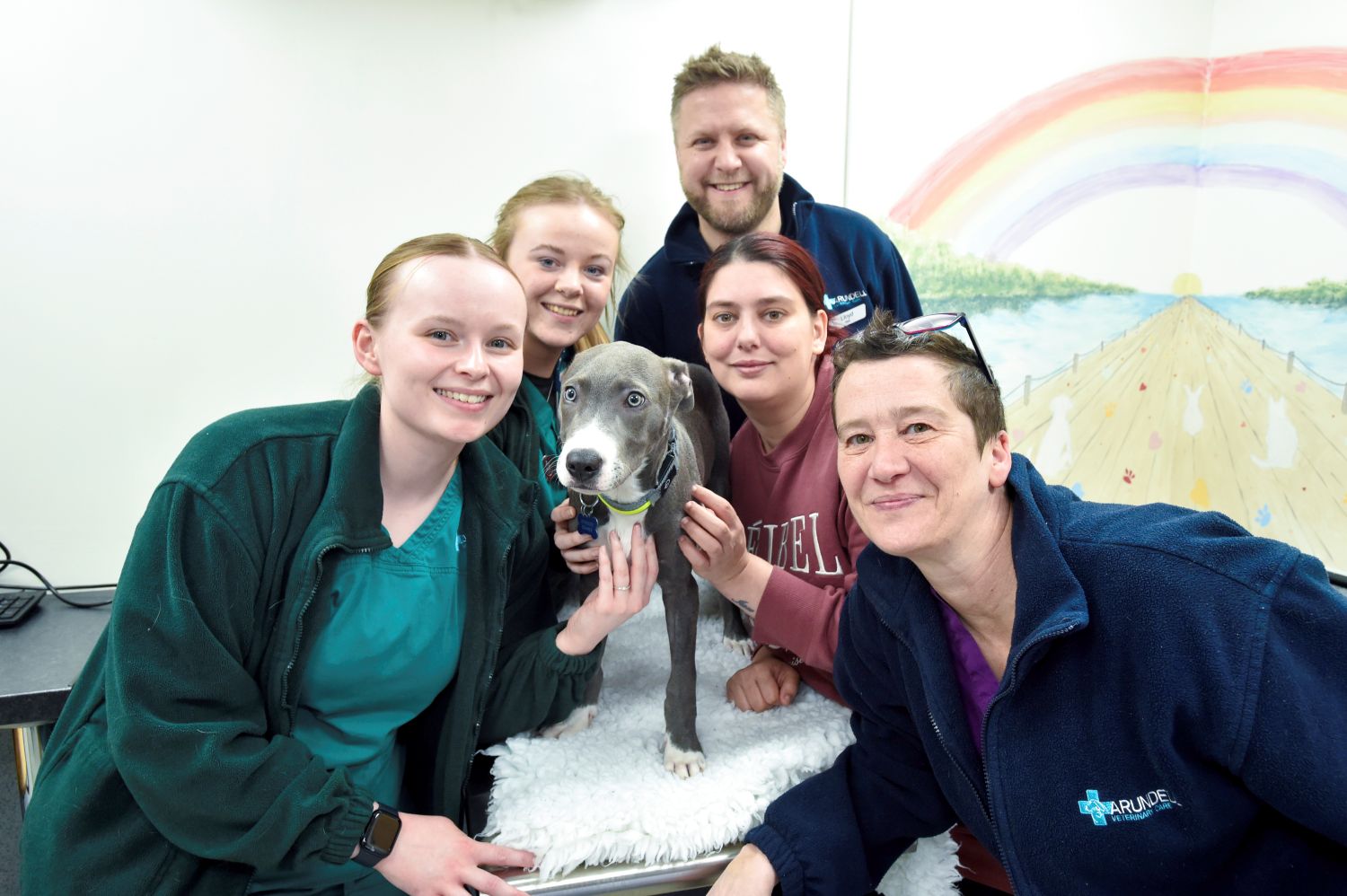
Bluey is back home with his owner Natalie Reeve following the emergency operation at Arundell Vets in Kirk Sandall, Doncaster, to repair a life-threatening diaphragmatic hernia.
A diaphragmatic hernia in a dog occurs when abdominal organs push through a defect in the diaphragm muscle into the chest cavity, often from trauma like a road traffic accident or, in the case of Bluey, a congenital condition.
Natalie rushed her new puppy to the 24-hour veterinary hospital, which is part of VetPartners, after he suddenly became poorly.
Bluey had stopped eating and drinking and began vomiting, breathing heavily and was extremely lethargic.
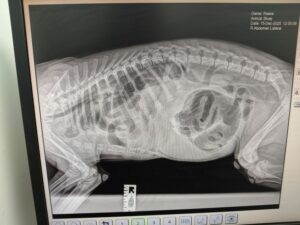 Even though blood tests did not show anything, senior vet Lloyd Groves was concerned about a possible blockage in the bowel so carried out a scan of Bluey’s abdomen and took X-rays of his chest and abdomen, right.
To his surprise, the X-rays showed a diaphragmatic hernia, which has probably been present since birth, and that was causing the super-cute Lurcher considerable pain, requiring immediate advanced surgery – a high risk for such a young puppy.
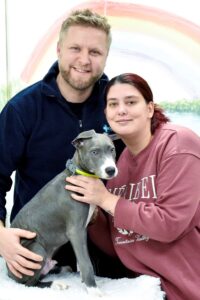 Lloyd, supported by a team of six veterinary nurses, performed the surgery to repair the hernia, with a nurse keeping him ventilated throughout the one-and-a-half-hour operation – and within 24 hours, Bluey was back to being a playful pup.
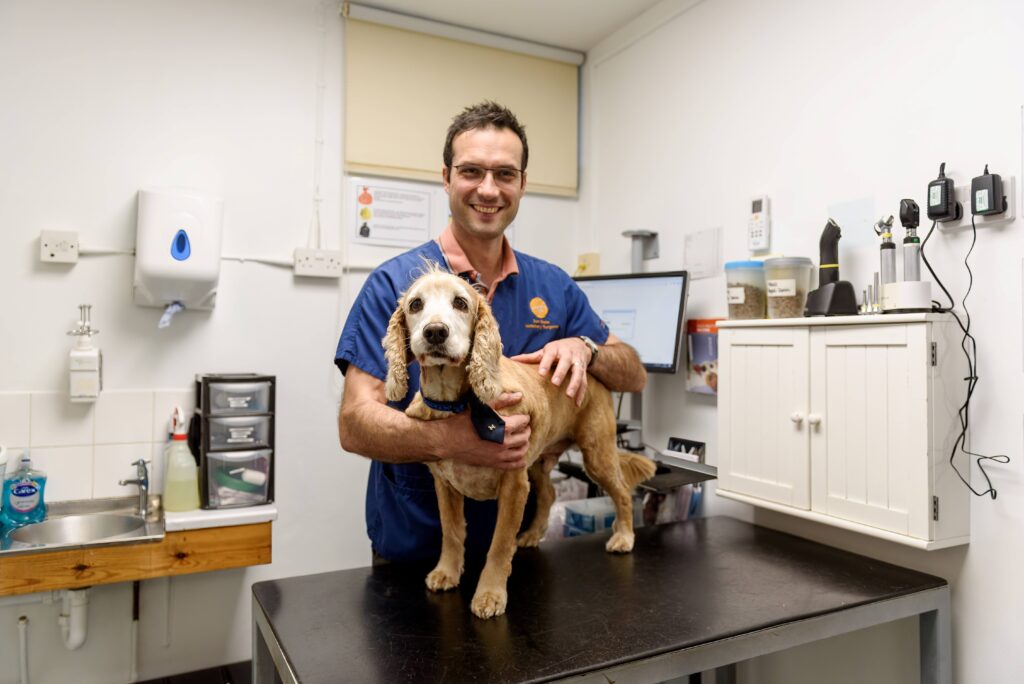
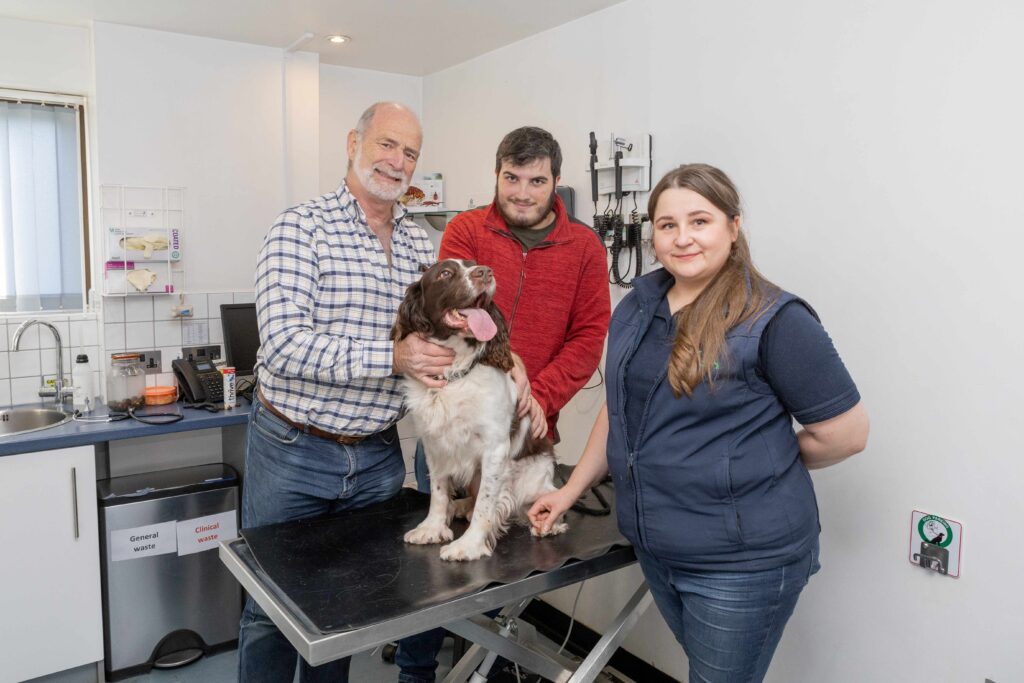
Lloyd, pictured right with Natalie and Bluey, said: “A diaphragmatic hernia is something not commonly seen and I haven’t personally seen one ever, in 11 years as a vet. He was very sad and quiet and very uncomfortable around his tummy. At first, we wondered if it could be parvovirus or a blockage in the bowel.
“I am really proud of the team as we had the right people, who are highly qualified and able to take on advanced surgery like this. It wasn’t without risk but patients who survive past 24 hours are normally OK. Those 24 hours are worrying for the owner, but they were really over the moon with how things went as they put a lot of trust in us.”
Natalie, who lives in Skellow, Doncaster, with her partner Steven and Bluey, said: “Seeing Bluey so poorly and having to go through major surgery was petrifying and I can’t thank Lloyd and his nurses enough for saving his life. 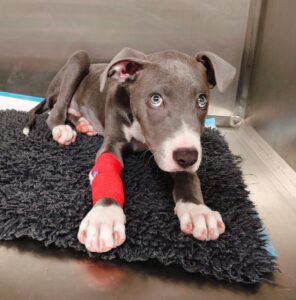 We were told to be prepared that he might not pull through so we couldn’t quite believe how quickly he recovered. He quickly bounced back and is thriving and loving life. He is now eating food and putting on weight.
“He’s so adorable that one of the veterinary nurses didn’t want to hand him back to us when we went to collect him! I think they had all fallen in love with him.”
Arundell Vets’ main practice in Kirk Sandall was awarded Veterinary Hospital status in 2024 following an inspection by the Royal College of Veterinary Surgeons (RCVS). Hospital status is the top accreditation under the RCVS Practice Standards Scheme and shows that Arundell Vets meets the highest UK standards for its premises, team, equipment, health and safety, hygiene, training and the dispensing of medication.
Article by Amanda Little, VetPartners PR and Communications Director. Email [email protected]