
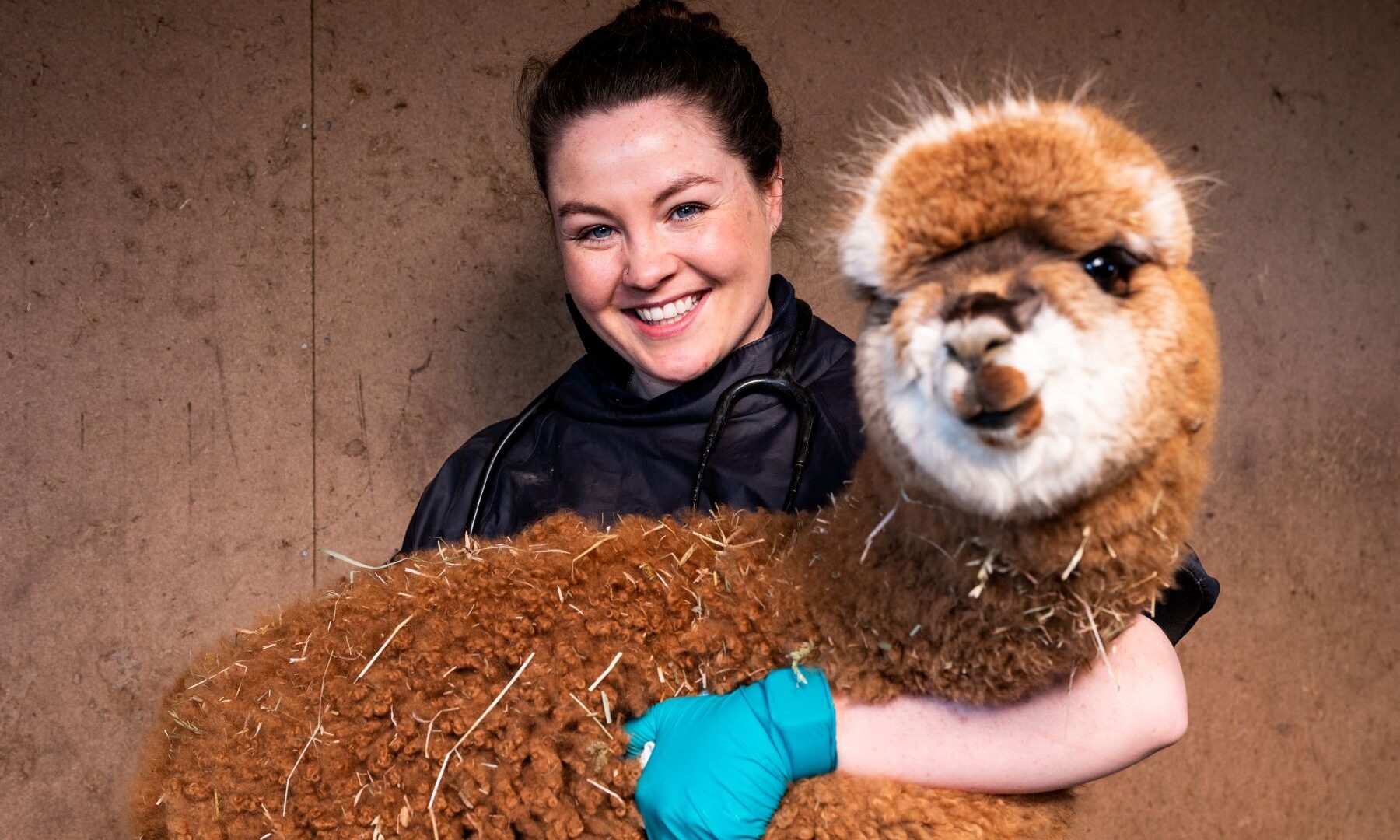
AS the camelid birthing season gets underway, Westpoint Farm Vets is urging alpaca and llama owners to plan ahead by banking frozen plasma to ensure vulnerable cria can receive life-saving treatment without delay.
Recognising growing challenges in accessing sterilely prepared camelid plasma, the Chelmsford veterinary practice has secured formal authorisation from the Veterinary Medicines Directorate (VMD) as a Non-Food Animal Blood Bank (NFABBA). The approval enables Westpoint Farm Vets to provide specialist plasma collection, processing and long-term storage services for the camelid community.
The service is led by Dr Ami Sawran, an RCVS Advanced Practitioner in Camelid Practice and one of the country’s foremost experts in the species, who has extensive experience treating critically ill newborn alpacas and llamas. Dr Sawran also sits on the Farm Executive atVetPartners.
 Ami said: “We have performed dozens of life-saving plasma transfusions in cria over recent years and have seen first-hand the benefits of intravenous plasma therapy. It was not an option to let this service disappear, so we have invested heavily in facilities and protocols that meet the stringent standards required for plasma production. Our aim is to ensure camelid owners continue to have access to a safe, reliable and proactive service that supports the health and welfare of their herds.”
Protecting young animals against disease
Newborn cria rely on antibodies, known as immunoglobulins, obtained through colostrum shortly after birth. These antibodies form the foundation of the young animal’s immune system and help protect against disease challenges present within the herd environment.
If a cria receives insufficient colostrum, or is unable to absorb antibodies effectively, it may develop Failure of Passive Transfer (FPT), leaving it significantly more vulnerable to illness, infection and potentially life-threatening septicaemia.
Certain newborns are at higher risk, including those born following difficult births or caesarean sections, premature cria, animals weighing less than 6kg, and those showing poor vigour, weak suck reflexes or inadequate weight gain.
The first six to eight hours after birth represent a critical window during which antibodies can be absorbed efficiently from colostrum. Once this period passes, absorption becomes increasingly limited, making timely intervention essential.
Protecting vulnerable cria to develop protection
Intravenous plasma transfusion provides a direct route for delivering immunoglobulins into the bloodstream, bypassing the limitations of gut absorption. Plasma sourced from healthy donors within the same herd offers the best opportunity for a vulnerable cria to develop protection against disease challenges specific to its environment.
It is ideal to collect and process plasma before it is needed. Because blood products cannot legally be stockpiled by veterinary practices for general use, and due to disease transmission concerns associated with sharing plasma between herds, advance planning is vital.
 Dr Sawran added: “Being prepared before an emergency occurs can make a huge difference to a cria’s survival and long-term health. Having a bank of your herd’s own plasma available means treatment can be delivered quickly when every hour counts.
“Using approved plasma banks ensures the quality and sterility of the product being administered directly into the bloodstream of vulnerable cria. These young animals are particularly susceptible to infection, which is why only properly collected and sterilely processed plasma should be used.”
The practice’s NFABBA-authorised facility follows rigorous quality control and traceability protocols throughout collection, processing and storage.
A single blood donation from a healthy, vaccinated camelid can produce two bags of plasma. Suitable donors are carefully selected and undergo veterinary assessment before collection.
Donated blood is then processed under sterile conditions, separated into plasma units, quality tested and frozen for long-term storage until required.
Westpoint Farm Vets offers two service options:
Tier 1 – Westpoint Internal Service
Westpoint manages the complete collection and processing pathway, including donor health assessment, blood collection, plasma processing, quality control and optional storage.
Tier 2 – Referring Veterinary Service
Veterinary practices can collect blood on-farm and submit blood to Westpoint for processing, quality assurance and storage, with temperature-controlled dispatch available when plasma is required.
With the unpacking season now underway, Westpoint Farm Vets is encouraging breeders to discuss plasma banking arrangements with their veterinary surgeon before an emergency arises.
For more information about plasma donation drives or camelid plasma banking services, contact Westpoint Farm Vets on 01306 628489
For media enquiries, contact Amanda Little, PR and Communications Director: [email protected] or 07970 198492