
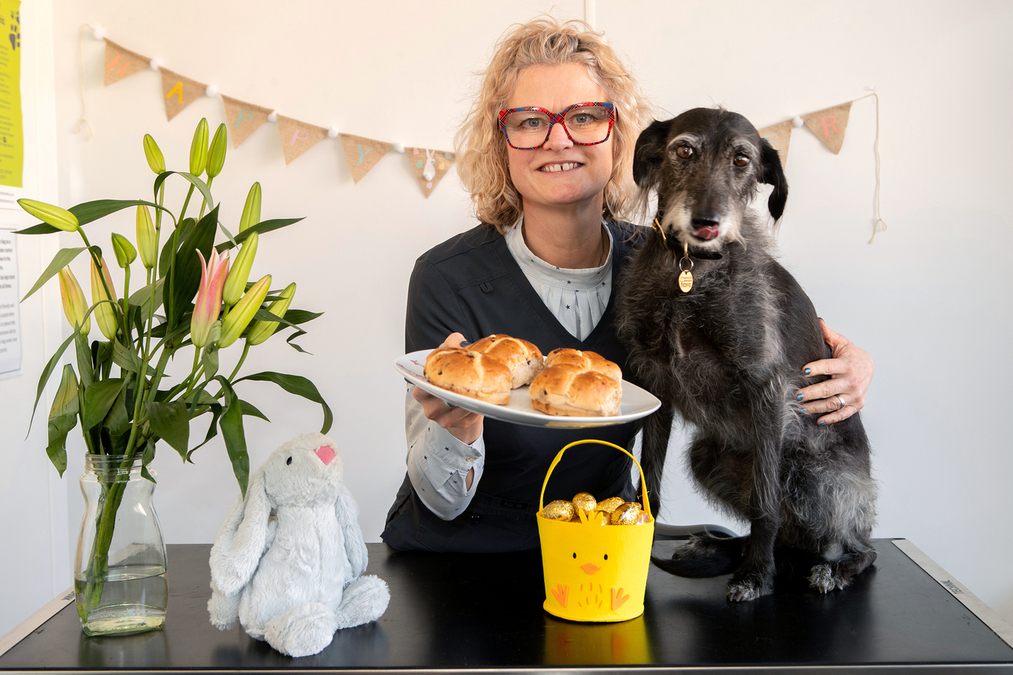
AS the sweet treats and egg hunts of Easter approach, VetPartners is calling on pet owners across the UK to take extra care to keep potentially toxic treats out of reach of animals, helping ensure celebrations are not interrupted by an urgent trip to the vet.
VetPartners, a veterinary group led by vets with veterinary practices and animal healthcare businesses across the UK, often sees a surge in pets suffering from chocolate poisoning at Easter, alongside illnesses linked to other food and sweet treats.
While chocolate and even hot cross buns might seem harmless to us, they can pose serious risks to pets – especially dogs – who can become dangerously unwell after eating even small amounts.
Dog owners are being reminded to keep chocolate eggs, sweets, hot cross buns and leftovers from roast dinners safely out of reach, as these can all be harmful – and in some cases fatal – if eaten.
Chocolate contains theobromine, a substance that dogs cannot process effectively. Dark chocolate contains higher levels, meaning even small quantities can cause illness, particularly in smaller dogs.
Meanwhile, raisins and sultanas found in hot cross buns and simnel cake are highly toxic to pets, and rich leftovers from Easter meals can lead to conditions such as gastroenteritis or choking hazards from cooked bones.
Common Easter Foods That Are Toxic to Pets
Honor Etherington, a vet at VetPartners, said: “We see a noticeable increase in chocolate poisoning cases every Easter. While some incidents involve well-meaning owners sharing treats, most occur when curious pets help themselves.
“We strongly advise keeping all chocolate and festive foods securely stored – ideally locked away or placed well out of reach. Even the most well-behaved pets can be tempted.
“If you suspect your pet has eaten something toxic, contact your veterinary practice immediately. If possible, let them know what your pet has eaten and how much, so they can advise you quickly on the next steps.”
Symptoms of chocolate poisoning can include vomiting, diarrhoea and an increased heart rate. In severe cases, it may lead to seizures or cardiac failure.
Pet owners should also be aware that some sweets contain xylitol, an artificial sweetener that is extremely dangerous to dogs and can cause vomiting, drowsiness, collapse and seizures.
VetPartners also advises against feeding pets Easter roast leftovers. Foods such as turkey and lamb are often rich and fatty, increasing the risk of gastroenteritis and, in some cases, pancreatitis – a serious and painful condition.
Honor added: “Prevention is always better than treatment. Taking a few simple precautions can help ensure both pets and their owners enjoy a happy and stress-free Easter. For more advice or if you are concerned about your pet, contact your local veterinary practice for guidance.
“Caring for our patients and supporting our clients is at the heart of everything we do. This commitment guides us in delivering exceptional patient care and an outstanding client experience.”
Eight Essential Easter Safety Tips for Pet Owners
VetPartners has compiled eight practical tips for pet owners:
- Keep chocolate eggs and treats out of reach, as chocolate can cause serious illness including seizures.
- Avoid giving dogs hot cross buns, as raisins, currants and sultanas are toxic to pets.
- Take care with Easter flowers – daffodils, tulips and crocuses are toxic, and lilies can be fatal to cats.
- Keep small toys and decorations away from pets to prevent choking or intestinal blockages.
- Never give cooked bones, as they can splinter and cause internal injuries or choking.
- Avoid feeding table scraps, as rich foods can lead to vomiting, diarrhoea or pancreatitis.
- Keep onions and garlic (in all forms) away from pets, as they can cause digestive upset and anaemia.
- Ensure pets cannot access alcohol, which can cause serious liver damage.
Article by Carolyn Small, PR & Communications Manager – email: [email protected]