
Last Updated: 19/02/26
As the leaves start to turn brown and the temperature starts to drop, it’s important that we keep an eye out for potential hazards that could be harmful for our dogs.
On this page:
- Watch out for poisonous plants
- Be safe and be seen
- Keep your dog warm and cosy
- Watch out for anti-freeze poisoning
Watch out for poisonous plants
While it’s great to take your dog out for a lovely autumn walk, it’s also vital to ensure that they do not eat anything that will make them unwell. Acorns, oak leaves, conkers and rotting fruit can all potentially be poisonous if eaten and may also cause intestinal obstructions. If you know your dog has eaten something they shouldn’t have or they show any signs of poisoning, which may include vomiting, diarrhoea, tummy pain, increased thirst, excessive drooling or tremors, please contact your veterinary practice straight away for advice. In severe cases delayed treatment can lead to serious illness (such as liver and kidney damage), so you must act quickly if you know or suspect your dog has eaten anything toxic.
Towards the end of the season, you should also be aware of hazards such as grit on the roads – check your dog’s paws after walks and rinse them thoroughly if needed. Contact your veterinary practice if your dog’s paws seem very irritated or they go lame.
Be safe and be seen
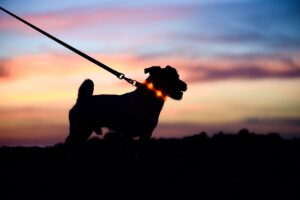
We also need to consider making our pets as visible as possible to others when out and about on darker early mornings or evenings.
Reflective or light up collars, harnesses, leads, coats or vests are a good idea to ensure that your dog is as visible as possible to drivers and other road users.
Consider a bright or reflective coat for yourself, and if you are going for walks in badly lit areas, a head torch can be useful for staying on the path or when poop scooping!
Keep your dog warm and cosy
Like us, some thin furred dogs might need to sport a warm coat when going for walks in colder weather.
Towards the end of the season, you should also be aware of hazards such as grit on the roads – check your dog’s paws after walks and rinse them thoroughly if needed. Contact your veterinary practice if you’re worried your dog may have injured one of their paws.
Watch out for anti-freeze poisoning
If you’re defrosting your car in the mornings, remember that ethylene glycol, found in de-icer and antifreeze, is poisonous to cats and dogs and can be fatal if not treated immediately.
Signs of antifreeze poisoning are vomiting, drooling, seeming drunk, having seizures and drinking and weeing more.
If you are worried that your pet is unwell or may have ingested antifreeze, contact your veterinary team straight away for advice.
For further advice, please reach out to your local VetPartners practice.
Did you find this article useful? Why not take a look at…
- Eight ways to keep your dog or cat safe
- How to keep your pets safe this BBQ season
- What is canine seasonal illness?