
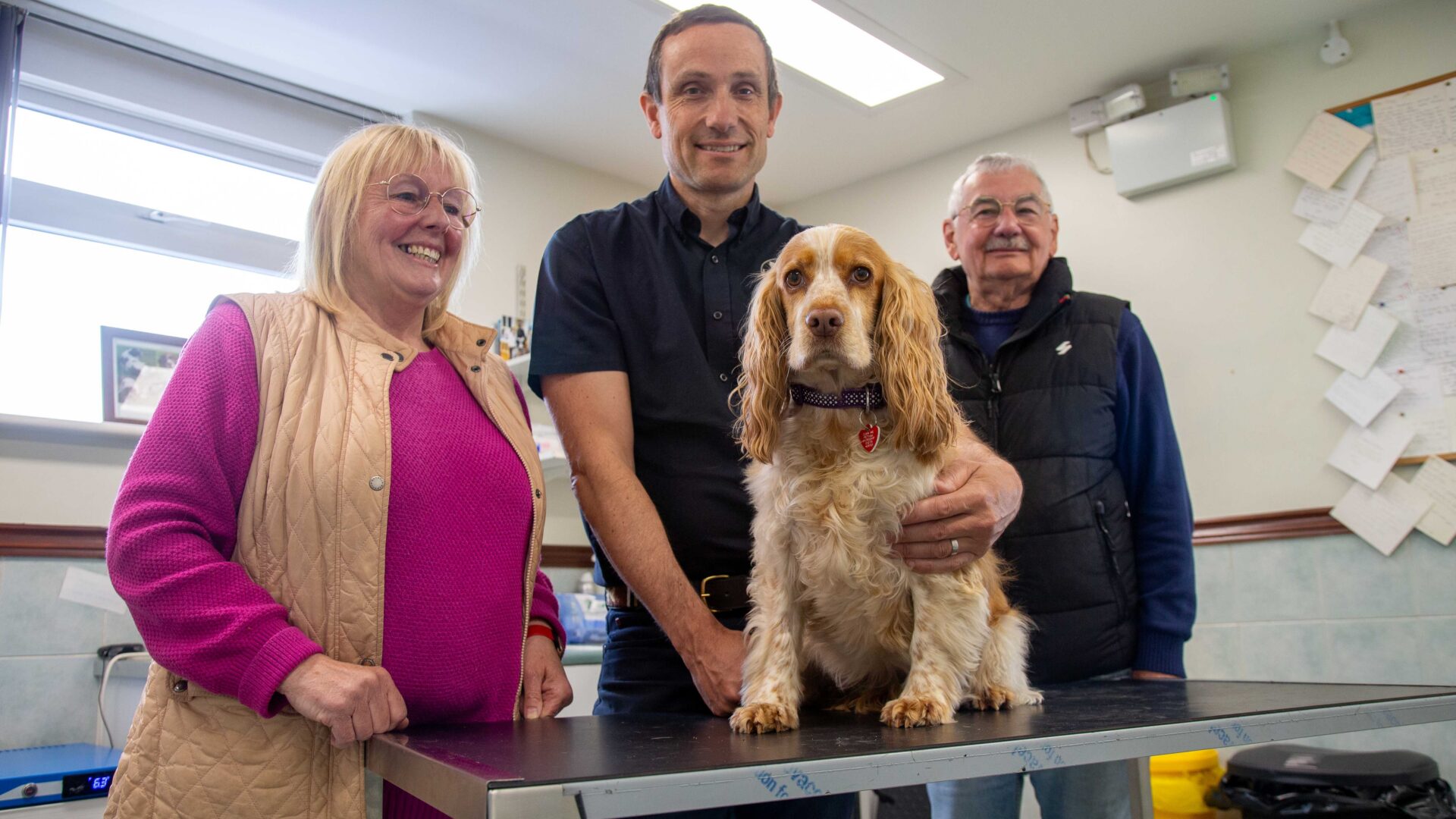
DOG walkers are being urged to be vigilant for adders after a pet was bitten and needed life-saving treatment.
Cocker Spaniel Callie was rushed to EC Straiton Vets with a suspected adder bite after she collapsed on an early morning walk in the Marquis Drive area of Cannock Chase in Staffordshire.
Her owner, Jackie Oliver, had opted to avoid the heathland of the Chase because she thought the paths and mown areas of Marquis Drive would be lower risk for adders but was horrified when her dog became ill and started drooling.
At EC Straiton’s veterinary hospital in Penkridge, Callie was given anti-venom and supportive care and has gone on to make a full recovery.
Vet Mark Mincher-Lockett, who is one of the practice’s clinical directors, said adders are active on Cannock Chase throughout spring and summer, and will often come out to bask in the sun to warm up if there’s been a cold start to the day.
Mark said: “Adder bites are very common in this area, and we usually see at least 10 a year. Luckily, with the two most recent cases, the owners acted quickly and brought their dogs to us straight away and we were able to administer anti-venom, which we store at the practice.
“With an adder bite, seeking veterinary advice as soon as possible is always important but especially so at this time of the year as the venom is more potent in springtime. If your dog is bitten out on a walk it is also advisable to carry them back to your car, if they are small enough, which helps stop the venom spreading around their body so quickly.
“If you do walk your dog where there’s a risk of encountering an adder, it’s best to avoid sunnier times of the day. Keep to the main paths and don’t let them go into or sniff around long grass or undergrowth and take extra care if your dog is off the lead.”
Signs that a dog has been bitten by an adder include:-
- Becoming subdued and lethargic
- Trembling or unsteadiness
- Drooling
- Increased heart rate
- Pain and swelling around the affected area
- A puncture wound, although this may be difficult to spot if your dog has a thick coat
- Bruising to the skin
After being cared for at the veterinary hospital for two days, Callie is now back home in Heath Hayes with Mrs Oliver, who said she thought she was doing the most sensible thing by avoiding the heathland and walking on Marquis Drive instead.
Mrs Oliver said: “Callie was enjoying some time off the lead on one of the mown areas when she came over to me and sat down at my feet facing me to let me know something was wrong. I picked her up and she squealed and I noticed she was drooling.
“My friend Jane and I managed to carry Callie to the car, where she collapsed and I was terrified I was going to lose her. I called EC Straiton who were brilliant and said to come straight away and when we arrived Mark came out to the car park to get her. He carried her inside and saved her life, and I’m so very grateful. I’ve been a client of the practice for around 50 years, and they’ve always given our pets exceptional care.
“I can only think that because the grass was short, the adder had nowhere to go and when Callie appeared it struck out. On the heathland they have more of a chance to retreat into the undergrowth, but it shows that you have to be careful everywhere and always be vigilant.”
EC Straiton Vets has been delivering the best possible care to pets, horses and farm animals in Staffordshire for 84 years, and has a dedicated team of vets and nurses at its veterinary hospital in Penkridge and branch surgery in Rugeley. For pets, it delivers a range of services to help keep pets happy and healthy, from routine preventive care to complex surgeries.
Article by Jo Browne, PR & Communications manager (South), email: [email protected]